

Home > Contemporary youth (Gen-Z) in Bangladesh
Globally, Generation Z, often shortened to Gen Z, refers to the demographic cohort of people born between the late 1990s and the early 2010s. Unlike the previous generation of Millennials, or Generation Y, Gen Z has grown up with access to the Internet and portable digital technology from a young age. Thus, they have been called “digital natives.”
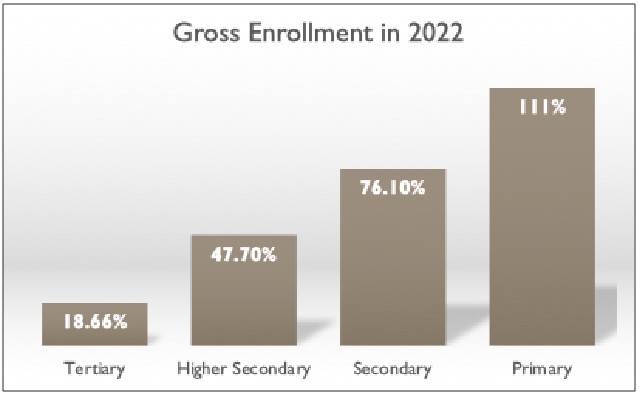
Gen Z in Bangladesh is not exceptional, particularly among economically privileged social classes. Moreover, unlike the previous generation, the majority are literate in their mother tongue and have completed primary education. Indeed,76% has gone on to secondary education up to grade 10 and 47% to higher secondary education up to grade 12. However, when it comes to tertiary education, only 18% have continued their studies at the university level.
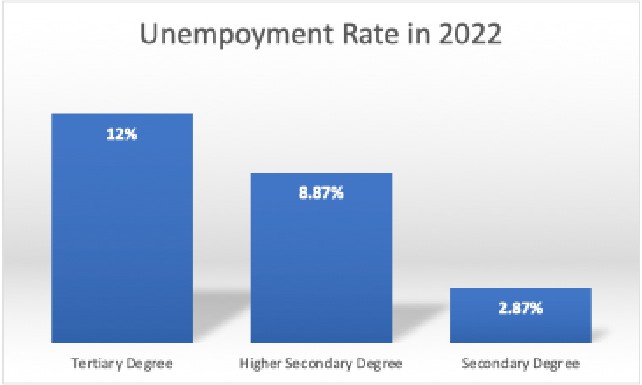
Despite their educational attainment, Gen Z has not enjoyed an accompanying increase in job opportunities, as the unemployment rate continues to be higher for the more educated in Bangladesh. This is because of Bangladesh’s reliance on to two sectors for its economic expansion: the export-oriented garment industry and remittances from overseas migrant workers, whose inexpensive labor is in high demand by global corporations and societies. Jobs in these sectors are mainly taken by young people from rural areas, most of whom have attained a primary or secondary education. This is not to say that higher educated youth cannot become employed in these sectors, but given their educational status, they do not find the working conditions and wages appropriate.
In this context, those with a higher education level recognize the civil service as one of the only white-collar job opportunitiesfor them. Many students, especially those at public universities from rural areas who are intelligent but have no personal/family connections to any private business sectors, are eagerly studying for the civil service examinations. Reforming the quota system was therefore a personal and serious issue for each student. Indeed, it is said that a candidate favored under the quota system was fifty times morelikely to secure a civil service job than a candidate applying by merit alone.
The political background of Bangladesh’s Gen Z is also remarkable in that they have lived under the rule of the Awami League for 16 years since the 2008 elections, growing up in a state of “one-party dictatorship” from their earliest memories to the present year. With no experience of regime change, some had become strong supporters of the government, while others had shown no interest in politics at all. The students who initiated the movement, called protesters, were mainly the latter “nonpolitical”youth.
The student movement in Bangladesh during July 2024 made headlines around the world when it forced former Prime Minister Sheikh Hasina to resign from power on August 5. Immediately after their movement’s “victory,” the youth painted public murals called Deyal Likhon in the capital city of Dhaka. This photo exhibition of Deyal Likhon is a record of the temporal power of young citizens to reform their nation.
Subscribe to our profiles on the following social networks.
Visitors online – 0
all visitors – 0
Copyright © 2024 | deyal likhon | All rights reserved.